

When BYD unveiled its DiSus Intelligent Body Control System in April 2023, it became the first Chinese automaker to own the full-stack intelligent vehicle body control technology — from the sensors to the actuators to the software that ties it all together. The system was developed exclusively for new energy vehicles (NEVs) and is now rolling out across BYD, Denza, and YangWang models.
What Does "DiSus" Mean?
The English name combines Di (the "D" from BYD — it appears across many BYD names, like the Xiao Di voice assistant and DiPilot self-driving system) with Sus (from suspension). The Chinese name is 云辇 (Yǔnnián), which loosely translates to something like "cloud carriage" — a poetic reference to the emperor's cloud-like chariot and the floating ride quality the system aims to deliver.
Why It Matters
Suspension technology has traditionally been the domain of European luxury brands. Mercedes-Benz has AIRMATIC and MAGIC BODY CONTROL, BMW has Adaptive M Suspension, and Porsche has PASM. DiSus represents BYD's answer — and in some ways, it exceeds what the Europeans offer, particularly in the hydraulic and extreme-performance tiers.
The key innovation is that DiSus is purpose-built for electric and hybrid vehicles, where heavy battery packs change the dynamics of how a car rides and handles. Traditional suspension tuning assumes a petrol engine and fuel tank — DiSus accounts for the weight and placement of batteries from the ground up.
The Four Tiers
DiSus-C: Intelligent Damping Body Control
What it is: The entry-level tier, similar to CDC (Continuously Damping Control) variable damping systems found in many premium cars.
How it works: Electronic control valves inside each shock absorber adjust the damping force in real time. The system reads the road and adjusts each wheel independently to balance comfort and handling.
Where you'll find it: BYD Han, Tang, and some Denza models. Several models gained DiSus-C via a simple OTA software update because they already had the necessary hardware installed from the factory.
DiSus-A: Intelligent Air Body Control
What it is: The mid-tier system, using air suspension instead of traditional coil springs.
How it works: Air springs at each corner can raise or lower the vehicle by up to 150mm. The system automatically adjusts ride height based on speed, road conditions, and driving mode. At highway speeds, it lowers the car for better aerodynamics and stability. Off-road, it raises it for extra clearance.
Where you'll find it: The Denza N7 was the first model to feature DiSus-A, and it's now available across several BYD and Denza models with air suspension hardware.
DiSus-P: Intelligent Hydraulic Body Control
What it is: The flagship tier. This is the system behind the YangWang U8's famous tank turns and water wading demonstrations. It uses hydraulic actuators rather than air springs or passive dampers.
How it works: Each wheel has its own hydraulic spring assembly that can be individually controlled. On the Denza B8, this provides 140mm of travel. The system can individually adjust each wheel's position in real time. On-board sensors — including LiDAR on some models — scan the road ahead and pre-adjust the suspension before the car reaches a bump or pothole.
Key capabilities:
- 140mm ride height adjustment on B5/B8 (200mm on YangWang U8) — from slammed for highway to maximum clearance for off-road
- Individual wheel control — each corner adjusts independently for flat cornering
- Tank turn capability — the U8 can spin on the spot with hydraulic suspension keeping the body stable
- Water wading mode — raises the body to maximum height for deep water crossings
- Active body control — virtually eliminates body roll in corners and nose dive under braking
Where you'll find it: YangWang U8 (G-Wagen competitor) and Denza B8 (flagship off-road SUV available in Australia). The B8's DiSus-P is what gives a $97,990 SUV ride quality that rivals vehicles costing two or three times the price.
DiSus-X: Extreme Performance
What it is: The most extreme tier — found on the YangWang U9 electric supercar. Enables the U9 to drive on three wheels and "dance" by bouncing its body on command. A technology showcase proving the system has headroom far beyond what any road car currently needs.
How the Tiers Compare
| Feature | DiSus-C | DiSus-A | DiSus-P | DiSus-X |
|---|---|---|---|---|
| Type | Variable damping | Air suspension | Hydraulic | Extreme hydraulic |
| Ride height | No | Up to 150mm | Up to 200mm | 200mm+ |
| Tank turn | No | No | Yes (U8) | Yes |
| 3-wheel driving | No | No | No | Yes (U9) |
| In Australia | TBC | TBC | Yes (B8) | No |
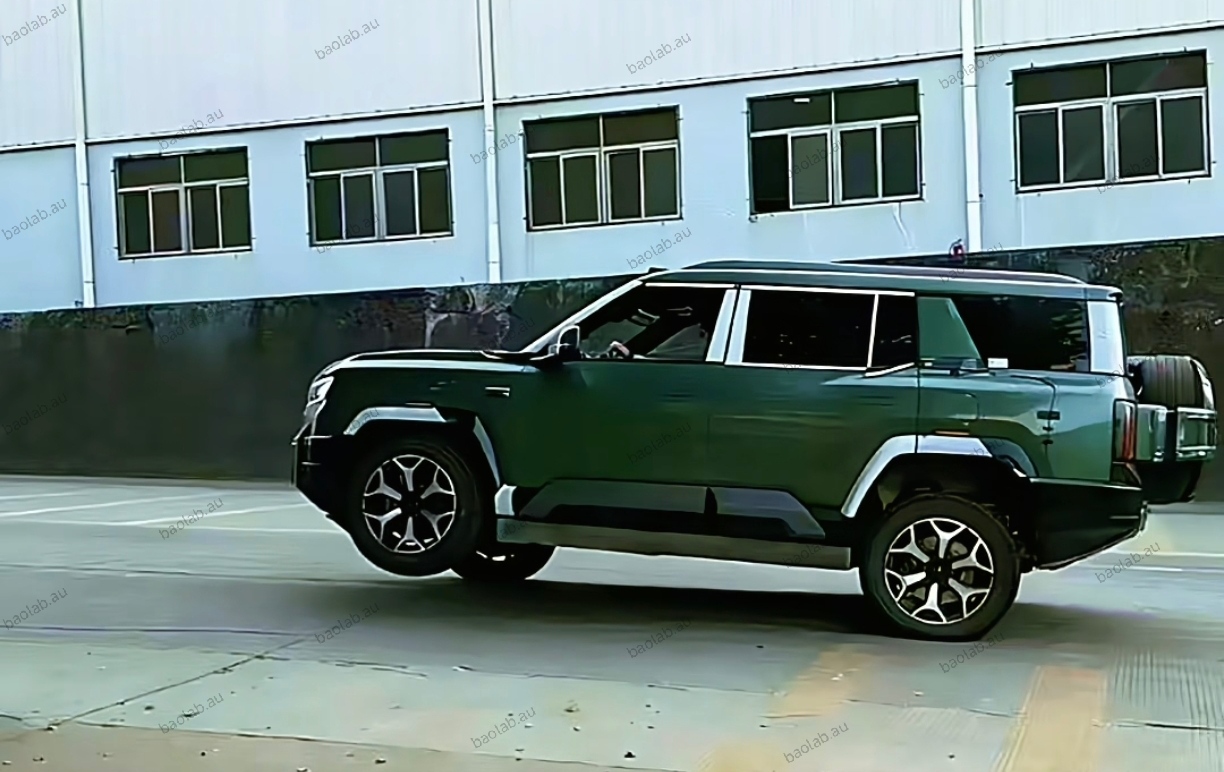
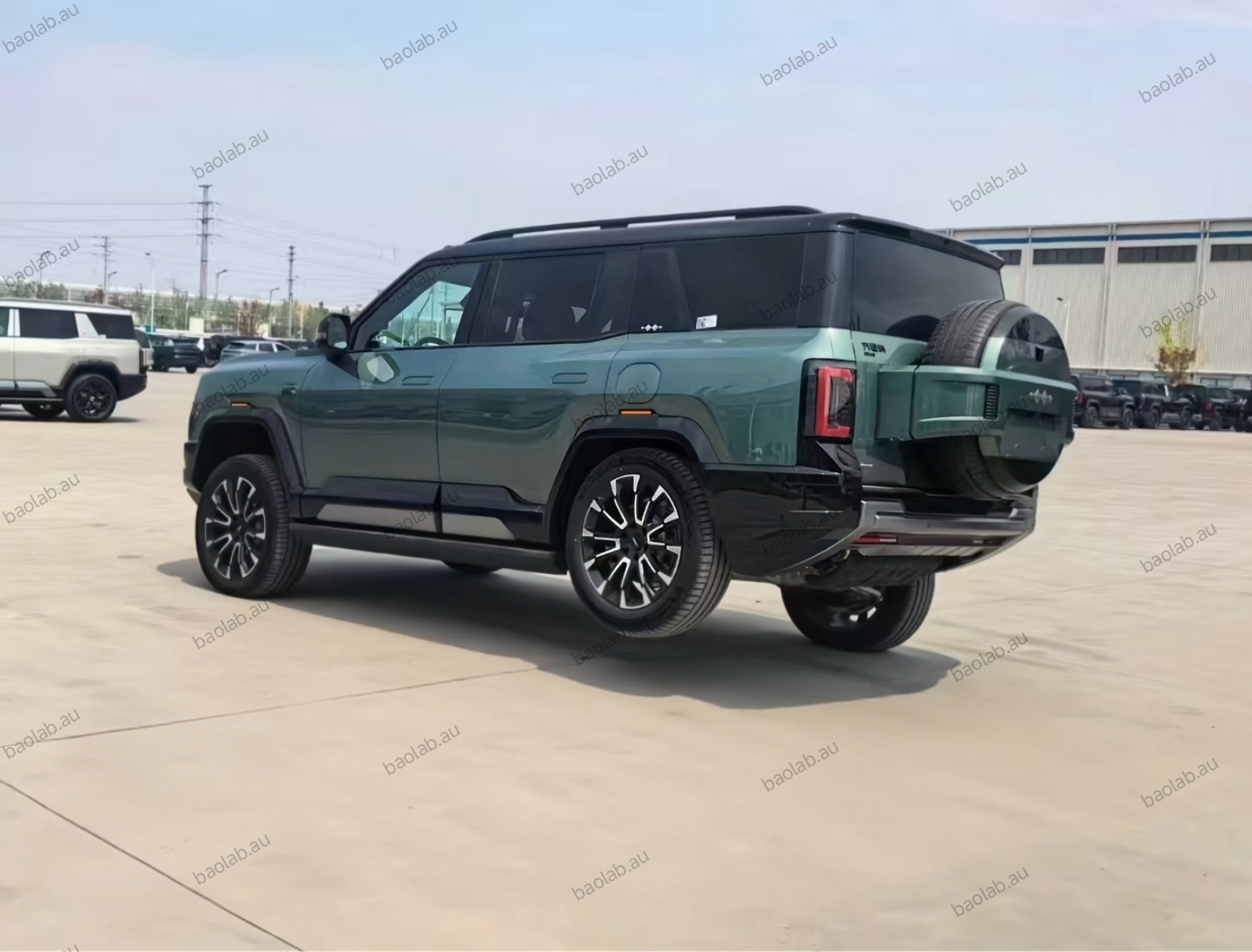
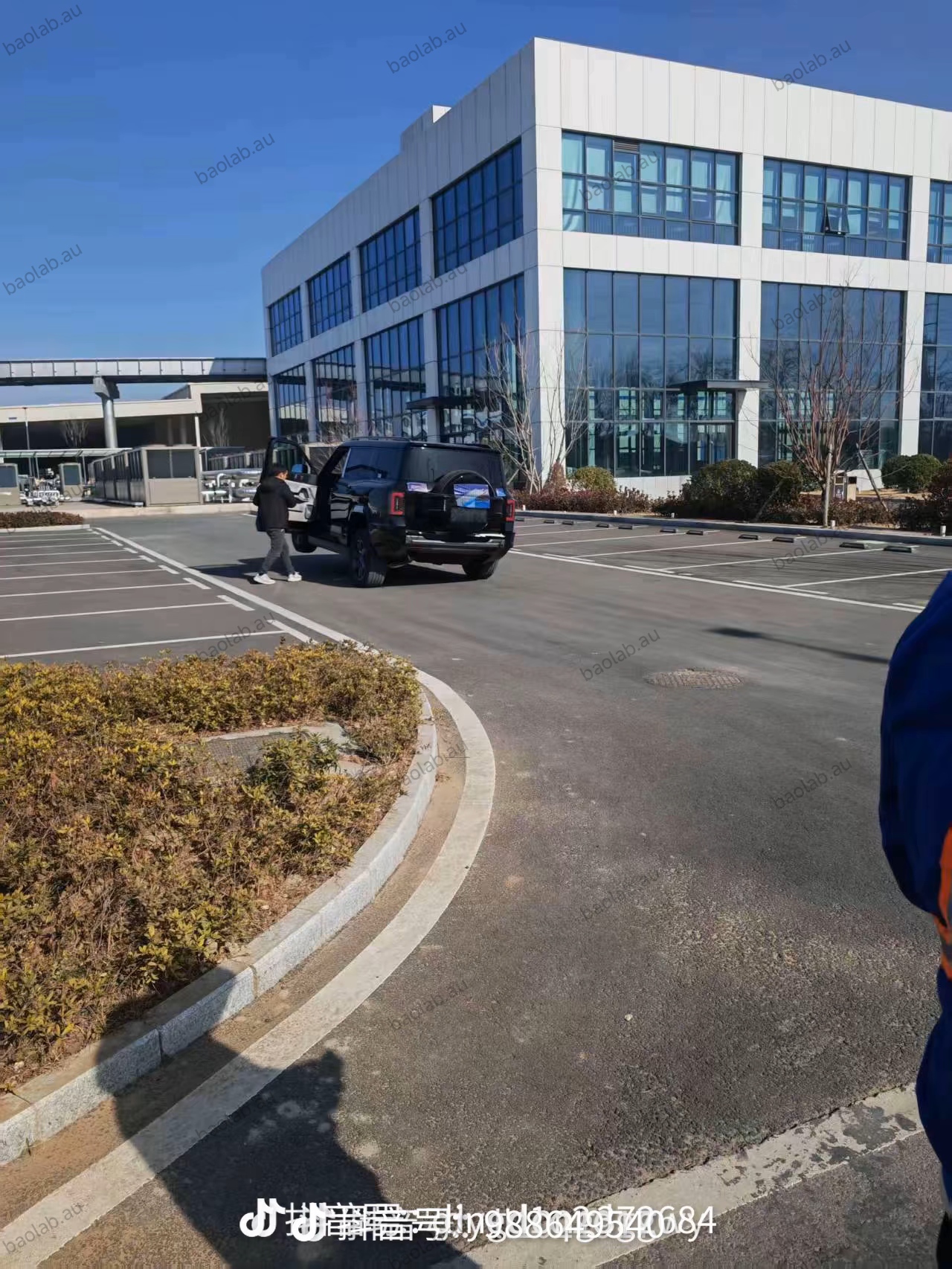
📸 Engineering Sample — Fangchengbao B8, China, ~10 April 2026
DiSus-P in action: this engineering sample B8 was spotted driving on three wheels, with the fourth wheel fully retracted by the hydraulic suspension system. Each corner adjusts independently, allowing the vehicle to maintain stability even with a wheel completely off the ground.
As BYD and Denza expand in Australia, expect more models with DiSus technology — from accessible DiSus-C on mainstream models to flagship DiSus-P on premium vehicles.
Read more: Denza B5 & B8: How the Brand Arrived in Australia · The e³ Platform Explained